
Short answer: clean off summer's damage, then tighten and lubricate everything before the dry season sets in
Getting a garage door ready for winter in Ruskin doesn't mean insulating against snow. It means reversing what months of heat, humidity, and storm season did to your door, then taking advantage of the cooler, drier weather ahead to do the maintenance that's hard to schedule in July. Lower humidity and calmer afternoons make October through February the easiest stretch of the year to get a door back in shape.
Why this season matters here
South Shore homes spend the warmer months fighting moisture. Wood and composite panels swell, steel components pick up condensation, and salt air near the coast speeds up rust on hinges, tracks, and bolts. Hurricane season also puts real stress on a garage door even if a storm never makes a direct hit — wind pressure, slamming from pressure changes, and debris can loosen hardware or knock a door slightly out of alignment. By the time the weather calms down, a lot of doors are carrying small problems that haven't become obvious yet.
There's also a practical local wrinkle: Sun City Center and parts of the South Shore area have a lot of seasonal residents who close up their homes for the hottest months and come back as the weather cools. A garage door that sat untouched through a humid summer often needs more than a quick once-over before it's back in daily use.
The fall garage door checklist
1. Look it over in daylight
Walk the door down and up while watching the tracks, rollers, and panels. Check for:
- Rust spots on hinges, the bottom bracket, or track bolts, especially if you're within a few miles of the water
- Panel warping or swelling along seams, which shows up more after a hot, wet summer
- Gaps where the weatherstripping has pulled away, hardened, or cracked
- Dents or scrapes on the tracks from storm debris or wind-driven branches
2. Lubricate moving parts
Humidity leaves a sticky film on rollers, hinges, and springs that attracts dirt and grit. Wipe everything down first, then apply a garage-door-specific lithium or silicone lubricant to the hinges, rollers, springs, and the opener's drive mechanism. Skip household oils like WD-40 for long-term lubrication — they break down fast in heat and humidity and can attract more dust than they repel.
3. Replace worn weatherstripping
The rubber seal along the bottom of the door and sides takes a beating from UV exposure and heat all summer. Cracked or brittle weatherstripping lets in cooler night air during winter cold snaps, plus dust, pollen, and small pests looking for a way in. It's an inexpensive fix and one of the more noticeable improvements for comfort inside an attached garage.
4. Check the balance
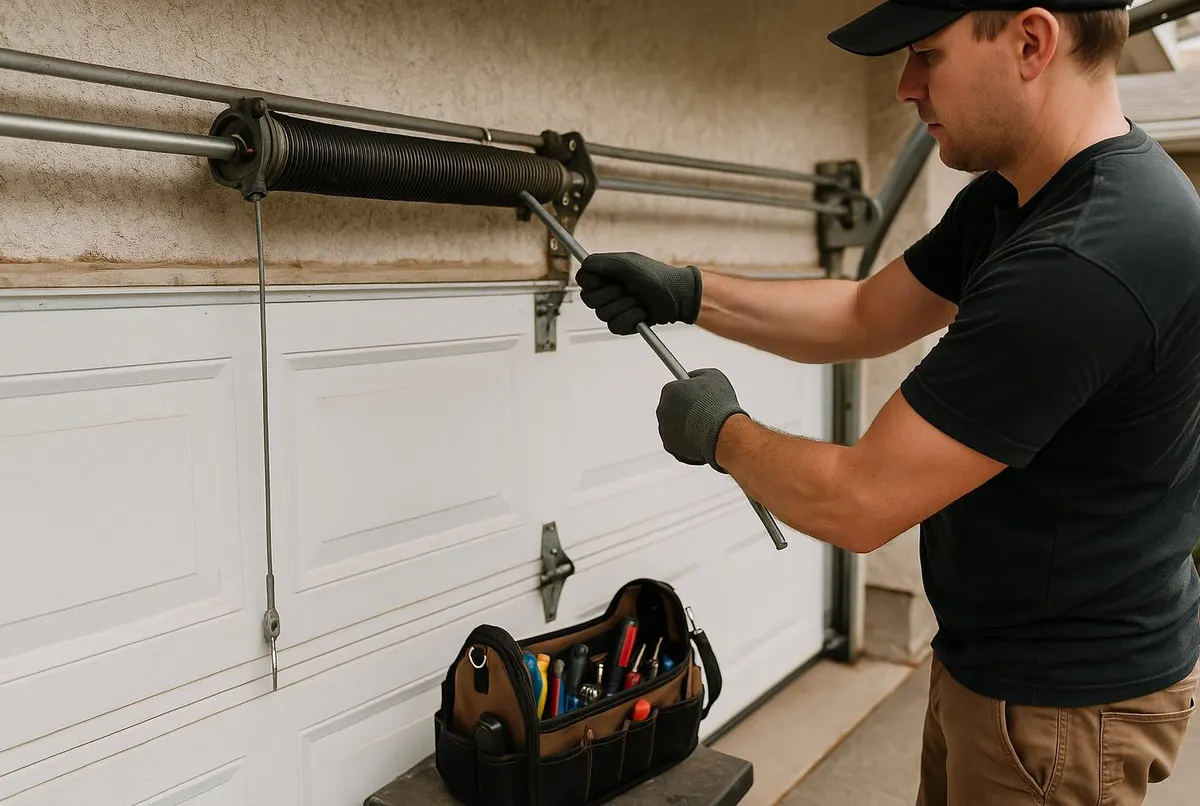
Disconnect the opener (pull the release handle) and lift the door halfway by hand. It should stay in place on its own. If it drifts up or crashes down, the springs have lost tension — often from the heat cycling of summer — and need adjustment. Don't attempt to adjust torsion springs yourself; they're under heavy tension and this is a job for a trained technician.
5. Tighten hardware
Vibration from storms, wind load, and regular daily use loosens bolts on the track brackets, hinges, and opener rail over time. A simple pass with a socket wrench on all visible hardware catches problems before they turn into a door that rattles, binds, or jumps the track.
6. Test the opener and safety sensors
Check that the photo-eye sensors near the bottom of the tracks are clean and properly aligned — summer storms and lawn work can knock them out of position. Replace opener and remote batteries now rather than waiting for them to fail; cooler overnight temperatures can shorten battery life faster than people expect.
7. Reopening a home that's been closed up
If your house sat empty for part of the summer, don't assume the door works the same as when you left. Run it through a full open-and-close cycle, listen for new grinding or scraping sounds, and check for any pests or nests that may have moved into the track housing or weatherstripping gaps while the garage was quiet.
When to call Ruskin Garage Door
If the balance test fails, if you spot rust working its way into the spring coils, or if the door feels rough and noisy no matter how much you lubricate it, it's worth having a technician take a look before small issues turn into a stuck or jammed door mid-winter. Our Garage Door Maintenance & Tune-Up service covers the full inspection, lubrication, and hardware tightening in one visit, and if rollers or cables show wear from a season of heat and salt air, our Garage Door Cable & Roller Replacement service gets those parts swapped out before they fail at an inconvenient moment.
If you're in Ruskin, Sun City Center, Apollo Beach, Riverview, or anywhere else in the South Shore area and your garage door needs a pre-winter once-over, give Ruskin Garage Door a call. We'll have it running smoothly before the cooler months settle in.